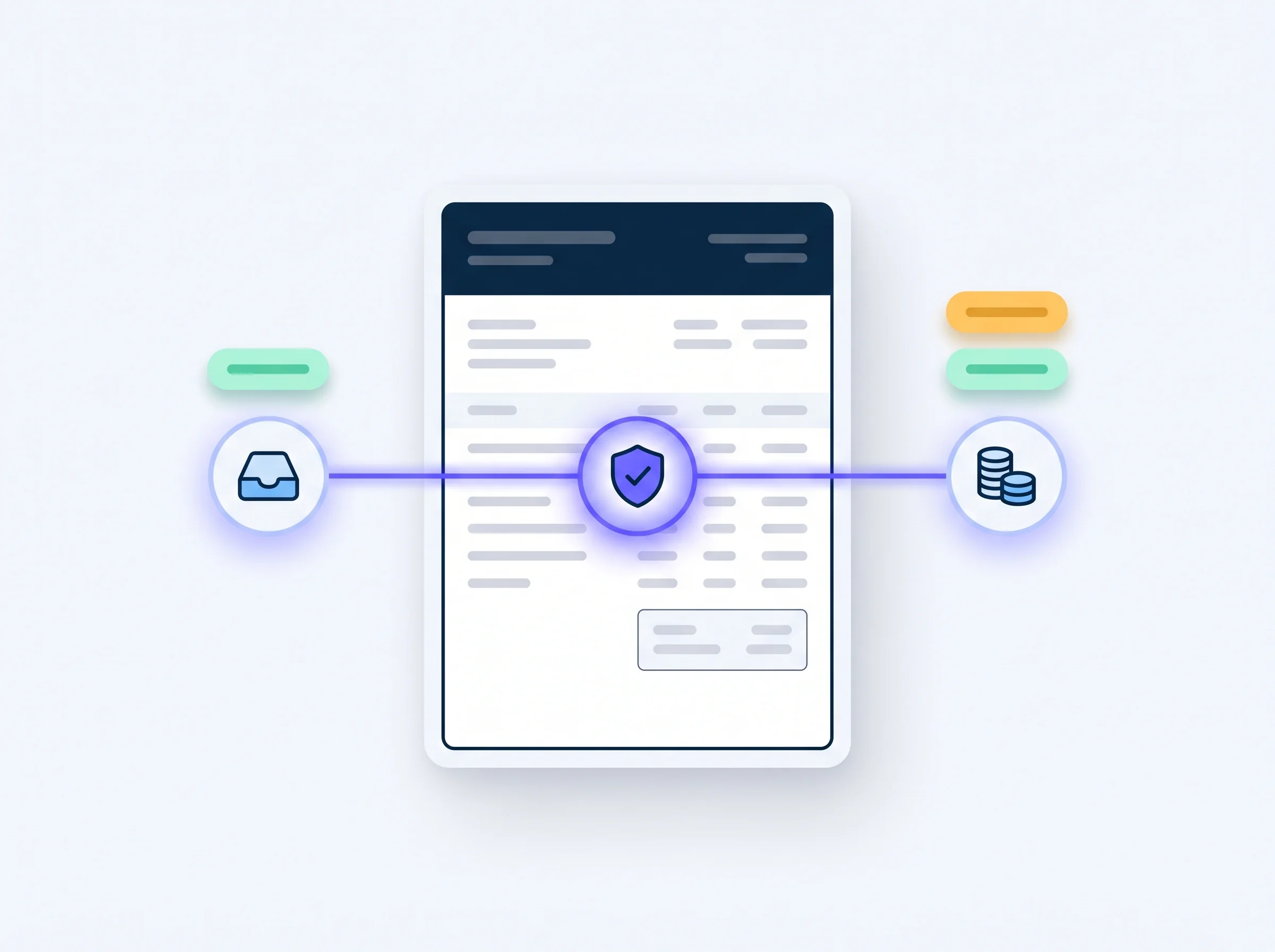
Finance stops rekeying
Invoice fields are extracted on upload and land in a payment queue, so the team reviews and approves instead of retyping supplier paperwork.

Investor due diligence, capital activity, invoices and governance run across every structure in one audited platform, where AI prepares the work and a named person approves it.
Fund administration errors are expensive because they are discovered late: an allocation that does not reconcile, a redemption paid ahead of due diligence, a covenant test nobody ran. Each obligation below is carried by a module that records the decision as the work happens.
| The obligation | Where CoreAdmin evidences it |
|---|---|
| Issue drawdown notices that reconcile to the commitment schedule, to the penny | Capital callsILPA-standard itemised calls. A call whose items do not reconcile cannot be approved, so the error surfaces before the notice goes out rather than after. |
| Allocate pro rata by unfunded commitment and honour investor excusals | Capital callsAllocation is computed from the register rather than a spreadsheet, with excusals applied and per-investor notices generated from the same figures. |
| Keep an investor's due diligence status current before any redemption is paid | Investor servicesA redemption cannot outrun the investor's CDD status. AI drafts contract notes; only a human can issue them, under four-eyes NAV dealing. |
| Test borrower covenants on their due dates and record what each test found | Covenant monitoringBorrower reporting lands in a compliance mailbox, AI extracts and tests the ratios, and every result queues for fund manager sign-off with the evidence attached. |
| Show that an authorised, different person released each payment | Invoice lifecycleAI extracts every field from an uploaded invoice into a payment queue that holds for the approver who actually holds the authority, with the approval record attached. |
| Calculate carried interest by a method an auditor can follow | Carry calculationsA European waterfall engine with compound preferred return, management fee step-down, GP clawback and per-LP capital account tracking, shown workings and all. |
| Answer the year-end confirmation request through a tracked, evidenced process | Audit confirmationsAn ISA 505-aligned workflow with AI-built drafts and maker-checker approval, so confirmation season is a queue rather than a scramble. |
Every row is an append-only record. Entries are added, never quietly rewritten, so the register and the underlying file cannot drift apart.
Invoice fields are extracted on upload and land in a payment queue, so the team reviews and approves instead of retyping supplier paperwork.

Due diligence lives against the same register the transfer agency works from, so the AML record and the investor record can never disagree.
Approval evidence is captured by the daily work, so year-end collation is a filter and an export rather than weeks of reconstruction.
Capital calls. ILPA-standard drawdowns: itemised calls, pro-rata allocation by unfunded commitment, investor excusals and per-investor notices. A call whose items do not reconcile to the penny cannot be approved.
Carry calculations. A European waterfall engine with compound preferred return, management fee step-down, GP clawback and per-LP capital account tracking, transparent enough to defend to an auditor.
Investor services. Register of members, subscriptions, redemptions and transfers with four-eyes NAV dealing. AI drafts contract notes; only a human can issue them, and a redemption cannot outrun the investor's CDD status.
Covenant monitoring. Borrower reporting lands in a compliance mailbox, AI extracts and tests the ratios, and every result queues for fund manager sign-off with the evidence attached.
Invoice lifecycle. AI extracts every field from uploaded invoices into a payment queue with an approval record, so finance stops rekeying and starts reviewing.
Audit confirmations. An ISA 505-aligned confirmation workflow with AI-built drafts and maker-checker approval, turning year-end confirmation chaos into a tracked process.
CoreAdmin sits alongside your existing administration and accounting cores rather than replacing them. Firms usually start with one controlled workflow, a capital call cycle or the invoice queue, and switch on further modules when the operating model is ready. Every AI-assisted step goes to a named person for decision, and the audit trail is produced as a by-product of the work.
AI drafts, extracts and tests. It never approves. Each decision is attributed to the individual who took it, alongside the version of the policy or agreement that applied at the time.
Where a second pair of eyes is required, the workflow will not complete without them, and the second reviewer cannot be the first. That is enforced by the platform rather than described in a procedure.
Very few firms do only fund work. The same house typically administers trusts, holding structures and corporate vehicles, and the back office carries all of it. Running a fund platform separately from the fiduciary compliance estate means two audit trails, two sets of user permissions and two answers to the same supervisory question.
CoreAdmin runs fund workflows in the same tenancy as the fiduciary ones, with the same named-officer approval chain over both. See the trust company view, or read how AI invoice processing works in Jersey fund administration.
Bring a live process to a focused 30-minute session: a capital call, a covenant certificate or an invoice queue.